
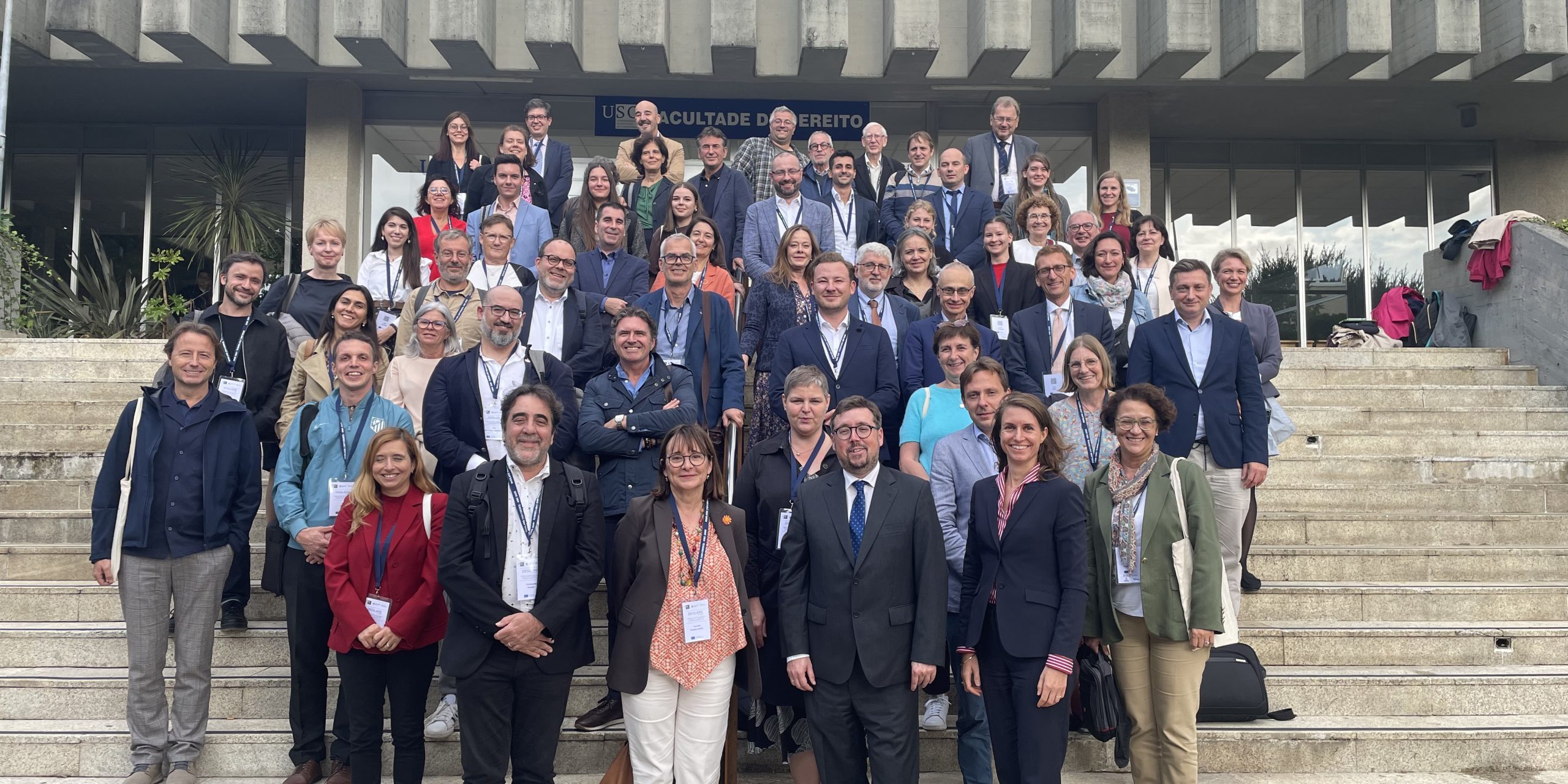
DIGILARE Final Conference Gathered Leading Experts on Digitalization and Labour Law
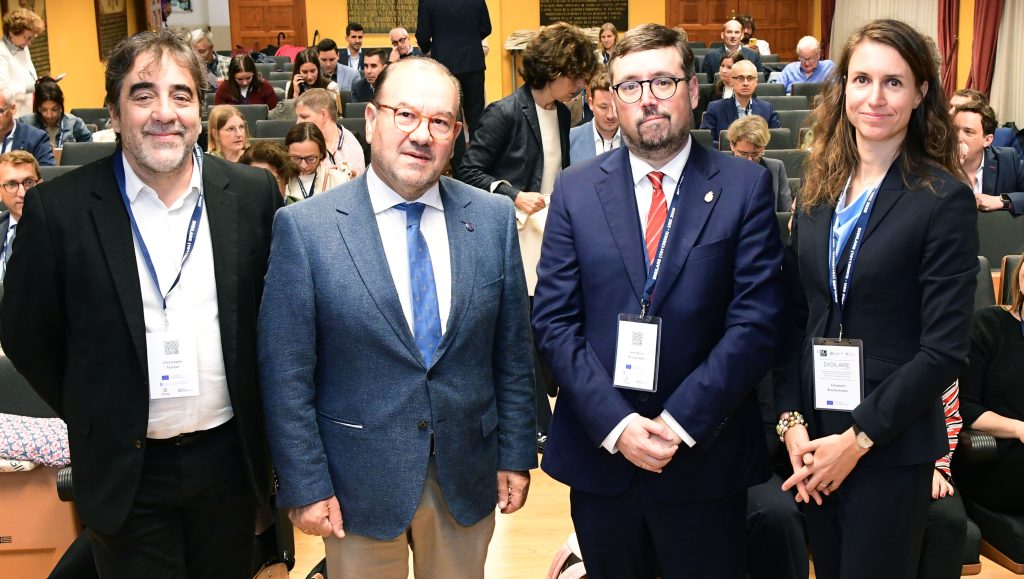
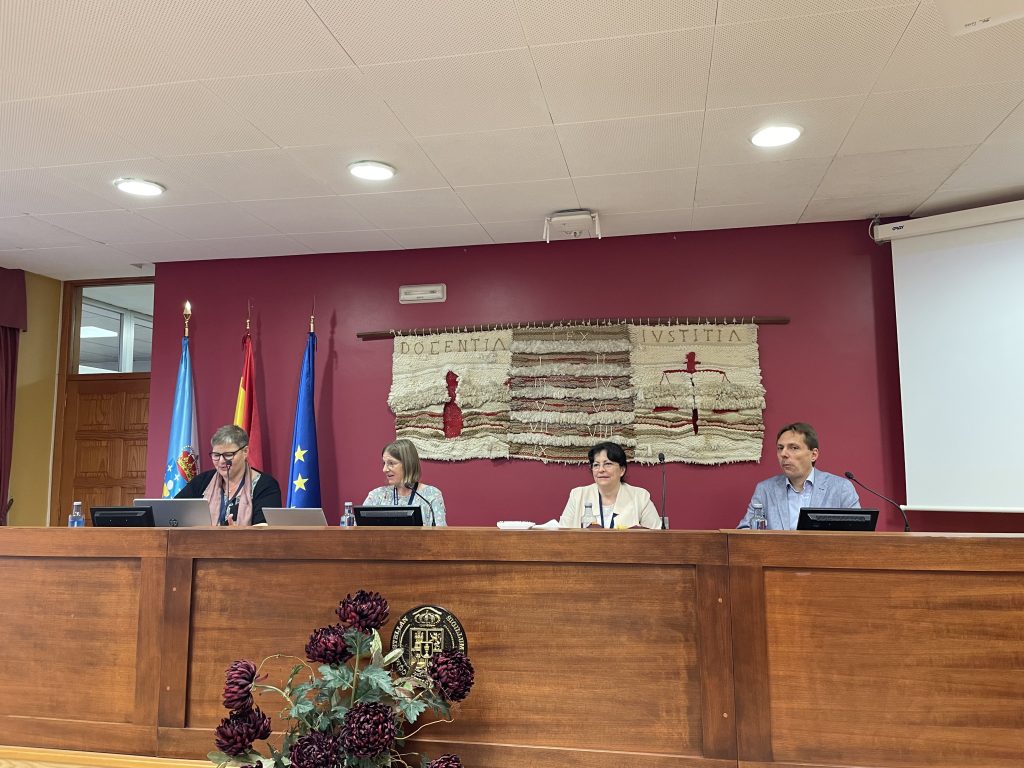
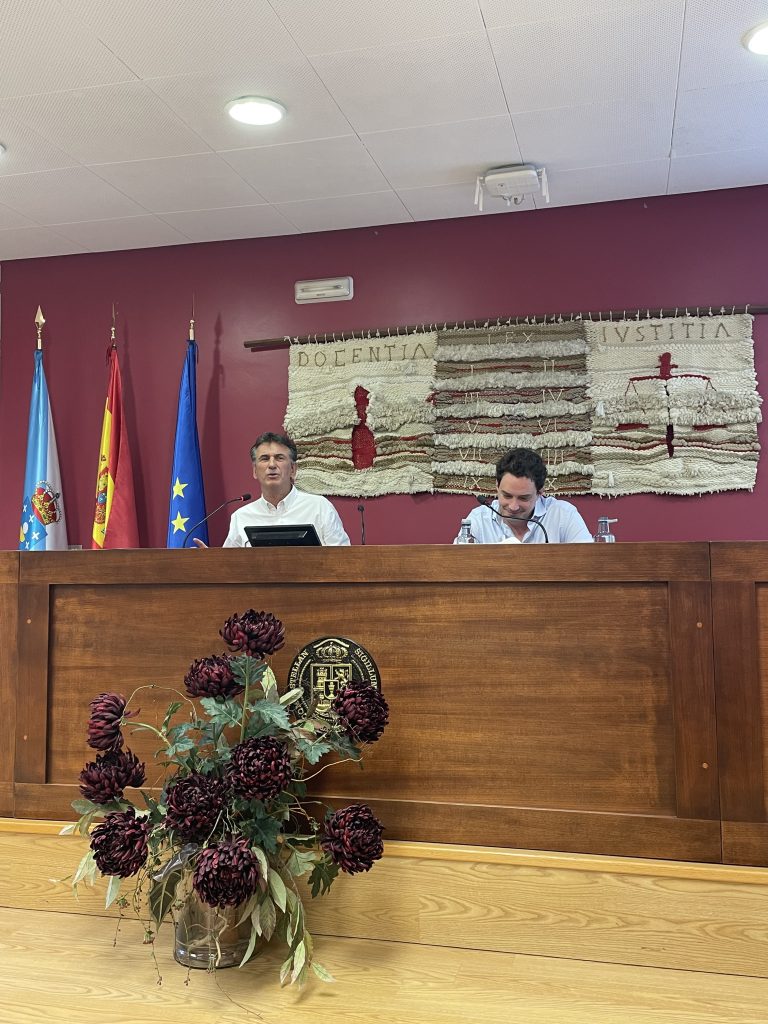
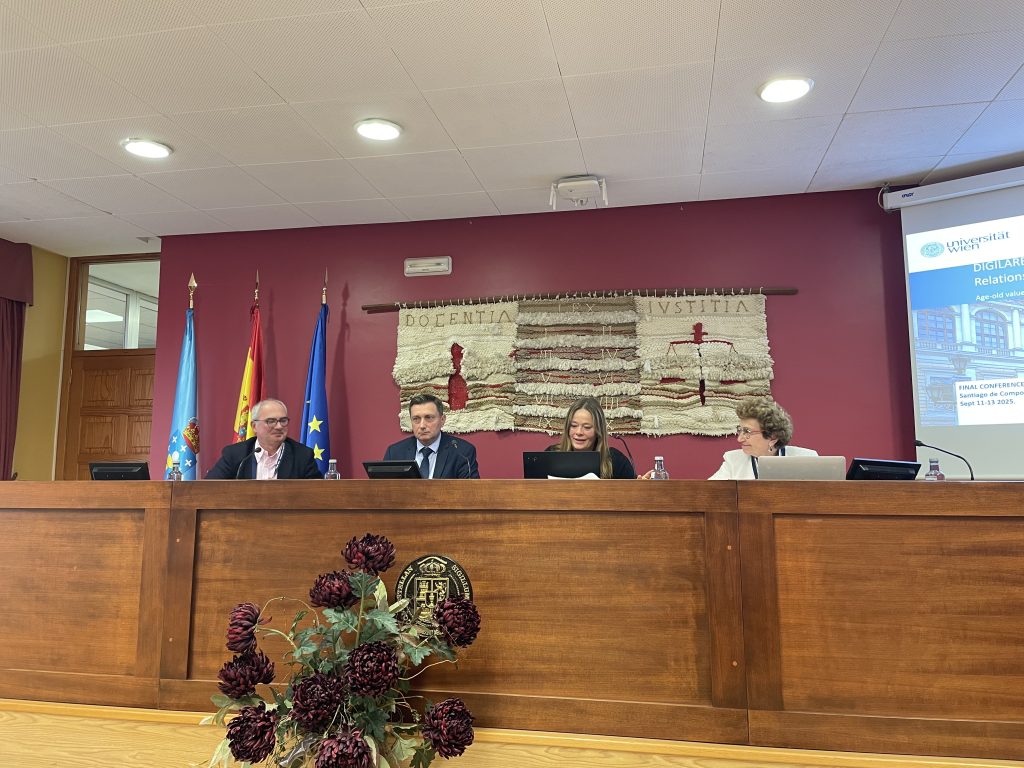
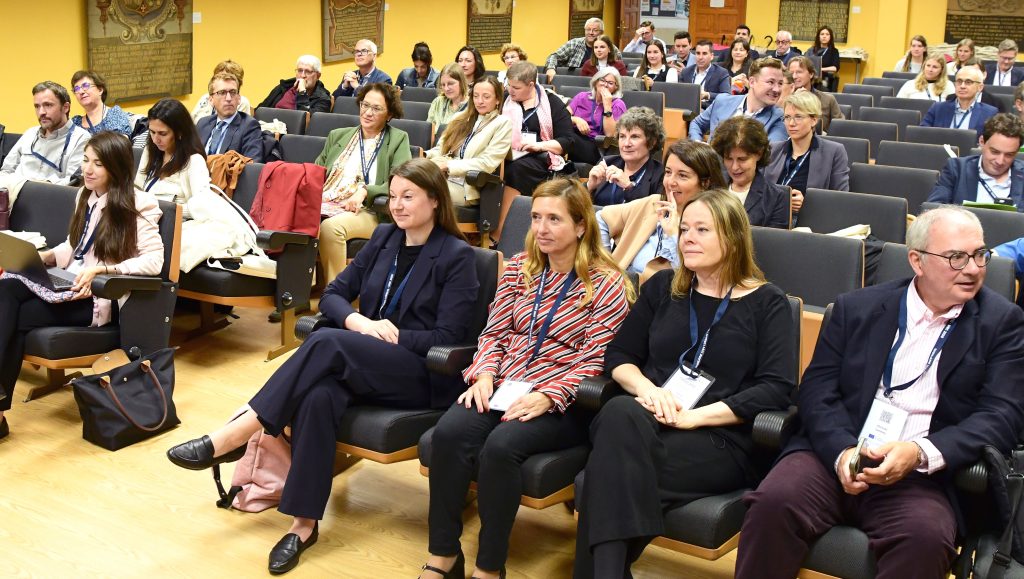
On 11 and 12 September, the Faculty of Law at the University of Santiago de Compostela hosted the final conference of the DIGILARE Project (101126503). The event brought together an exceptional group of experts to reflect on the challenges and opportunities of digitalisation and the transformation of worker representation. The members of the research team presented their main conclusions to more than 80 participants from 18 countries, under the direction of Professors José María Miranda Boto and Elisabeth Brameshuber.
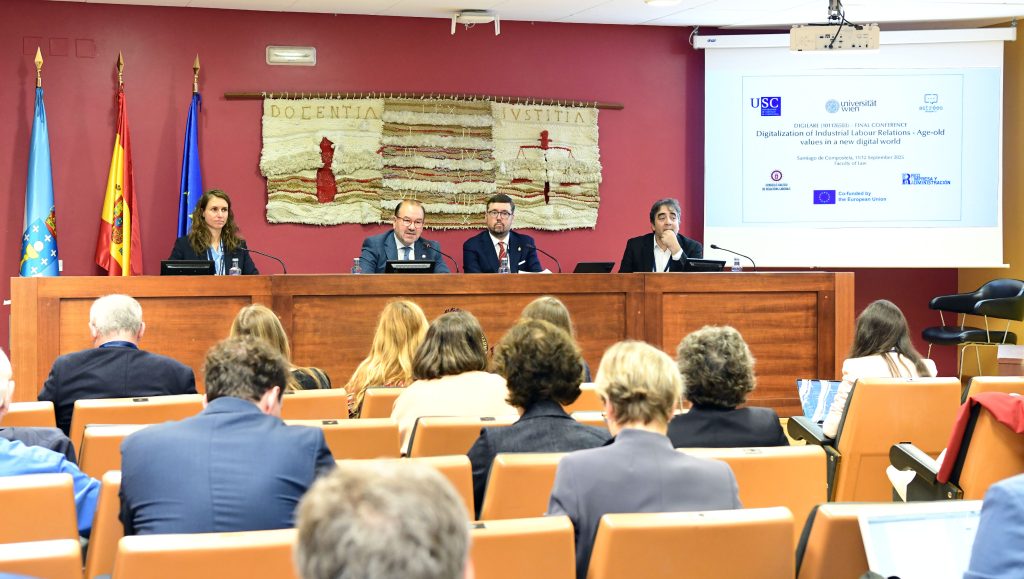
The conference was formally opened by Antonio López Díaz, Rector of the University of Santiago de Compostela, who highlighted the institution’s commitment to fostering research and dialogue on the future of work. The program also featured a recorded intervention by Joaquín Pérez Rey, Secretary of State for Labour of Spain, underlining the strategic importance of these discussions for national and European labor policies.
A key moment of the event was the participation of Lourdes Arastey, Judge at the European Court of Justice, who delivered an authoritative analysis of the role of European case law in shaping labor rights in the digital era, as the final speech of the conference. Her intervention emphasized the need for coherent legal frameworks to address the challenges posed by new forms of employment.
The academic dimension was particularly strong, with contributions from leading universities across Europe, including: Universidade de Santiago de Compostela, Universidad Complutense de Madrid, Universidad Carlos III de Madrid, Universidad de Salamanca and Universidad de León (Spain), Universität Wien (Austria), Universität Kassel (Germany), Université Lyon 2 Lumière (France), Lunds universitet (Sweden), Maastricht University (Netherlands), Pázmány Péter Katolikus Egyetem (Hungary), İstanbul Bilgi Üniversitesi (Turkey), Tartu Ülikool (Estonia), Università degli Studi di Cagliari and Università di Bari (Italy), Universidade do Minho (Portugal), Universitatea Babeș-Bolyai (Romania), Uniwersytet Śląski w Katowicach (Poland), Université du Luxembourg, and University of Oxford (UK).
Judicial and governmental bodies included the Cour de Cassation (France), the Tribunal Supremo (Spain), and the Arbeits- und Sozialgericht Wien (Austria), as well as ministries from Austria, Ireland, Poland, and the Czech Republic. Social partners played a central role, with major trade unions such as Solidarność (Poland), Confédération française démocratique du travail, Services, Industrial, Professional and Technical Union of Ireland, Confederația Națională Sindicală Cartel Alfa (Romania), Comisiones Obreras and Unión General de Trabajadores (Spain), and Industriegewerkschaft Metall (Germany), alongside employer organizations including Confederación de Empresarios de Galicia, Confindustria, Konfederacja Lewiatan, and IBEC. Austrian social partners were also strongly represented through Arbeiterkammer Wien, the Microsoft Austria Works Council, and the Wirtschaftskammer Niederösterreich. European-level organizations such as the European Trade Union Confederation, Eurocadres, and the European Committee of Social Rights further enriched the dialogue.
The conference was made possible thanks to the financial support of the European Commission under the SOCPL-2022-IND-REL-01 funding programme and the Xunta de Galicia through the Consellería de Cultura, Educación e Universidades. The organization also benefited from the collaboration of the Consello Galego de Relacións Laborais and the Red Empresa y Administración of the University of Santiago de Compostela.
This final conference marked the culmination of DIGILARE’s work, reinforcing the importance of international cooperation and dialogue with social partners to build in fair and sustainable labor markets for the digital age. The academic results will be published in 2026 in open access, and the team will present a policy guidance document to the European Commisssion before the end of the year, which will be translated into 12 languages.
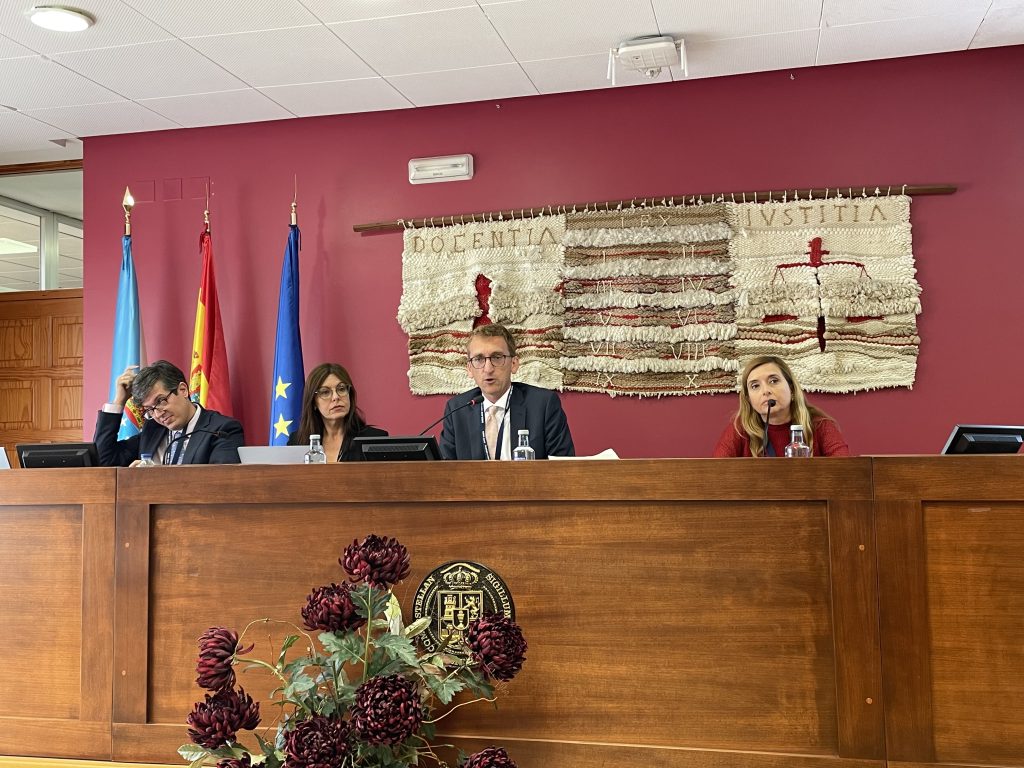
Pictures: (c) Santi Alvite